Apartment renovation
Apartment renovation: what's included in the price and what's left out
An apartment renovation can be a refresh of paint and flooring or a full replacement of infrastructure, layout, kitchen and bathrooms, and the difference between quotes comes mainly from the scope each contractor understood. In most apartments the work gets stuck because of the wrong order: finishes chosen late, infrastructure problems discovered only after the walls are opened, and tradespeople waiting for each other. Before asking for quotes, decide what stays and what gets replaced, and write a list of work room by room. That way you can compare quotes on the same basis and plan payments by stage.
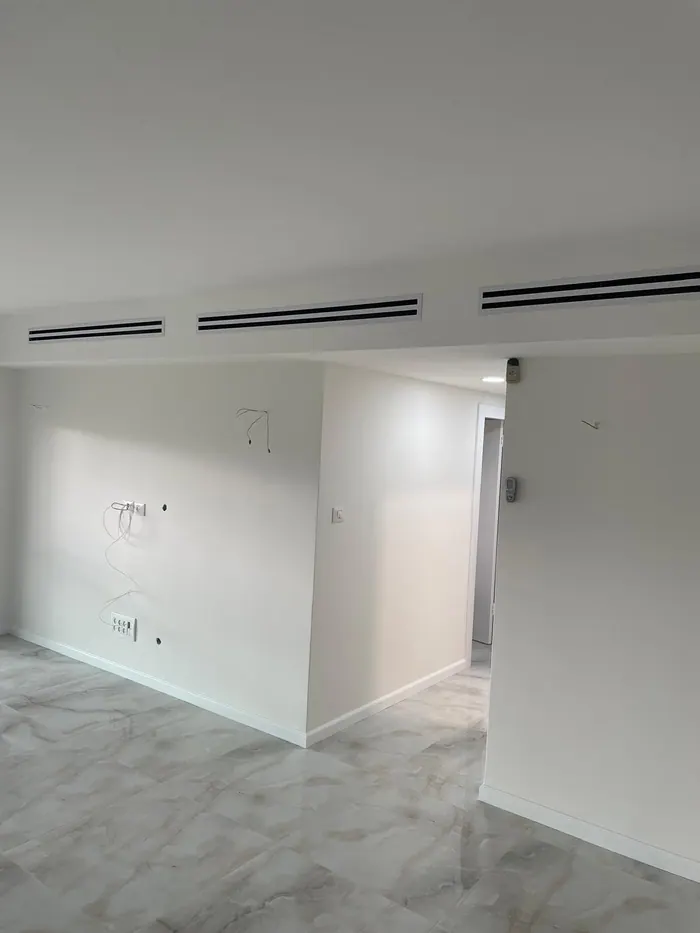
90,000-420,000 ₪
per apartment, partial to extensive renovation
The range is a ballpark only. The final price is set after inspecting the property, the scope of work, the finishing materials and site conditions.
What's usually included?
- Demolition and removal
- Electrical and plumbing infrastructure
- Flooring, drywall and paint
- Kitchen and bathrooms
- Coordinating stages and finishes
What affects the price?
- Apartment size
- Number of wet rooms
- Whether infrastructure is being replaced
- Level of finishing materials
- Living there during the work or an empty apartment
How does RBM help keep it organized?
- Collecting requirements and photos
- Work broken down by section
- Splitting into stages and payments
- Updates and documentation throughout the work
Stages of the work
- 01
Site visit, photos and a list of requirements
The contractor walks through the apartment, photographs the current condition and asks about each room what changes and what stays as it is. At this stage you agree together on what's inside the job and what's left out, and who is responsible for choosing the finishing materials.
- 02
Specification by section and payments
The requirements become a specification split into sections: demolition, electrical, plumbing, flooring, drywall, paint, kitchen and bathrooms. The homeowner approves the specification and the stage-by-stage payment split before an agreement is signed, so each payment is tied to work you can see.
- 03
Demolition and opening up infrastructure
Whatever is being replaced is removed, and walls and floors are opened where infrastructure runs. If pipes or wiring turn out to be in bad shape, work stops, photos are taken, and you decide together whether to replace them and at what price, before continuing.
- 04
Electrical, plumbing and partitions
Electrical and water points are moved to their new locations, partitions are built and the wet rooms are waterproofed. Before the walls are closed, the homeowner goes over the location of every outlet, switch and water point with the contractor and approves them.
- 05
Flooring, wall tiling and drywall
Once the infrastructure is closed up, flooring, wall tiling, plaster and drywall ceilings begin. The tiles and finishing materials need to be on site before this stage, so deciding who orders them and when is part of the planning, not something you settle along the way.
- 06
Kitchen, paint and handover
Finally the kitchen, doors and sanitaryware are installed, and everything is painted and cleaned. Handover is done in a joint walkthrough with a written snag list, and the last payment is released only after the entire list is closed.
What to check before you pay
- Ask to see photos of the electrical and plumbing in every wall before it's closed up with plaster or drywall.
- Make sure every change agreed verbally during the work is written down with its price before you pay for the stage.
- Check that the outlets, switches and water points are exactly where the plan approved them and that they all work before handover.
- Check the flooring in side lighting: tiles at an even height, full grout and no tiles that sound hollow when tapped.
- Ask for a plan or photos of the pipe and wiring routes inside the walls at the end of the job, and keep them.
Apartment renovation price list by line item
7 line items · updated 11/2026
Cosmetic apartment renovation
1,400-2,500 ₪
per m² · Painting, repairs, flooring or finishes without fully replacing infrastructure.
Full apartment renovation
2,500-5,500 ₪
per m² · Includes infrastructure, finishes, layout and work coordination.
2-room apartment, cosmetic
45,000-85,000 ₪
per apartment · Initial range for a small apartment with a basic spec.
3-room apartment, full
130,000-290,000 ₪
per apartment · Depends on the number of bathrooms, flooring and kitchen.
4-room apartment, full
180,000-450,000 ₪
per apartment · Involves many types of work and coordination between tradespeople.
Changing the interior layout
12,000-80,000 ₪
per project · Demolition, construction, electrical, plumbing and finishes according to the design.
Work management and coordination
5%-12%
of the project · When a coordinator or main contractor manages the tradespeople.
Updated November 2026 · price varies by spec and site conditions
See the full price listQuestions about Apartment renovation
How do you compare apartment renovation quotes?
Ask all the contractors to quote on the same room-by-room list of work, and check in each quote what's included in each section: demolition, removal, infrastructure, finishing materials and installation. An especially cheap quote often leaves a whole section out. It's also worth checking the payment split and how extras discovered midway are priced. If one quote includes a full pipe replacement and another only spot repairs, the price difference doesn't tell you who is cheaper. Mark in a table what each contractor included and ask for clarification on anything missing.
Is the price per m² enough for comparison?
The price per m² gives a general direction, but apartments of the same size can be very different: the number of wet rooms, replacing infrastructure and layout changes all change the picture. So ask for a breakdown by section, and only then check the total price relative to the area. Also ask what happens to the price if the actual area differs from the measurement in the quote. For example, in an apartment where the kitchen and bathrooms are being replaced, the price per m² will be much higher than in an apartment of exactly the same size where you're only painting and replacing the flooring.
Can you live in the apartment during a full renovation?
In a full renovation it's very hard, because there are periods without water, electricity or a kitchen, and the dust gets into every room. In a cosmetic renovation you can sometimes move room by room. If you stay, agree in advance on which rooms stay closed and clean and how you'll be told about water and power shutoffs. It's also worth planning where you'll cook and shower while the kitchen and bathroom are torn out. Some people move to relatives or a temporary apartment for the hardest period, and come back once the infrastructure is closed up and there's less dust.
What should you buy yourself and what should you leave to the contractor?
Homeowners usually buy tiles, sanitaryware, faucets, light fixtures and doors themselves, and the contractor supplies building and infrastructure materials. What matters is writing in the quote who buys each item, when it needs to arrive on site and who is responsible if it arrives damaged or in the wrong size. It's also worth checking whether the contractor is willing to install products they didn't choose, and on what terms. For example, a wall-hung toilet needs a concealed cistern that has to be on site before the wall is built, even if the toilet itself only arrives at the end.
What happens when a problem is found after the walls are opened?
In older apartments this happens quite a lot: rusty pipes, old wiring or moisture that wasn't visible from outside. The contractor should stop, show you the problem and propose a solution with a written price. Only after you've approved it in writing does the extra work go into the plan and the payments, so the budget doesn't quietly run away. For example, old iron pipes found in the kitchen wall can lead to a decision to replace the whole water line, not just the exposed section. It's worth keeping a margin in the budget for findings like this right from the start.
What should you keep after the renovation is finished?
Keep the final specification, all the approved changes, receipts for materials and products, and photos of the infrastructure before it was closed up. When you want to hang a shelf, drill into a wall or deal with a leak in the future, these photos will save unnecessary chiseling. It's also worth keeping the contact details of every tradesperson who worked in the apartment. For example, a photo of the shower wall before tiling will show you exactly where the pipes run when you want to install a towel rail or a grab bar. Keep everything in an organized folder by room.
Related renovation work
Private house renovation
1,500-6,500 ₪
per m², by scope and finish level02Demolition and removal
1,500-35,000 ₪
by scope of demolition and removal03Painting
1,800-12,000 ₪
by number of rooms and amount of repairs04Plaster and skim coat
75-650 ₪
per m², by finish type05Drywall
280-650 ₪
per m², typical work06Flooring
180-620 ₪
per m², excluding expensive tilesRegistered renovation contractors by city
- Jerusalem992
- Tel Aviv-Yafo487
- Rishon LeZion410
- אום אל-פחם343
- Petah Tikva315
- Be'er Sheva294
- Nazareth282
- Netanya253
- Haifa252
- Ashkelon244
- Holon244
- Ramat Gan214
- Ashdod208
- Herzliya182
- Hadera171
- Rehovot164
- Kfar Saba161
- טייבה157
- עילוט149
- מעלה עירון136
- Hod HaSharon125
- Ra'anana124
- Bnei Brak117
- מג'דל שמס107
Looking for a contractor for apartment renovation?
Build a project file with a cost range, milestones and terms, and send it to contractors who work in an organized way.
Build a project file